Healthcare in Mexico Is Affordable. Can I Just Pay Cash Instead of Buying Health Insurance in Mexico?
Short Answer
For some people, paying cash for healthcare in Mexico may be a reasonable alternative to buying health insurance. The answer depends on your financial resources, your tolerance for risk, and your ability to absorb the cost of an unexpected major medical event.
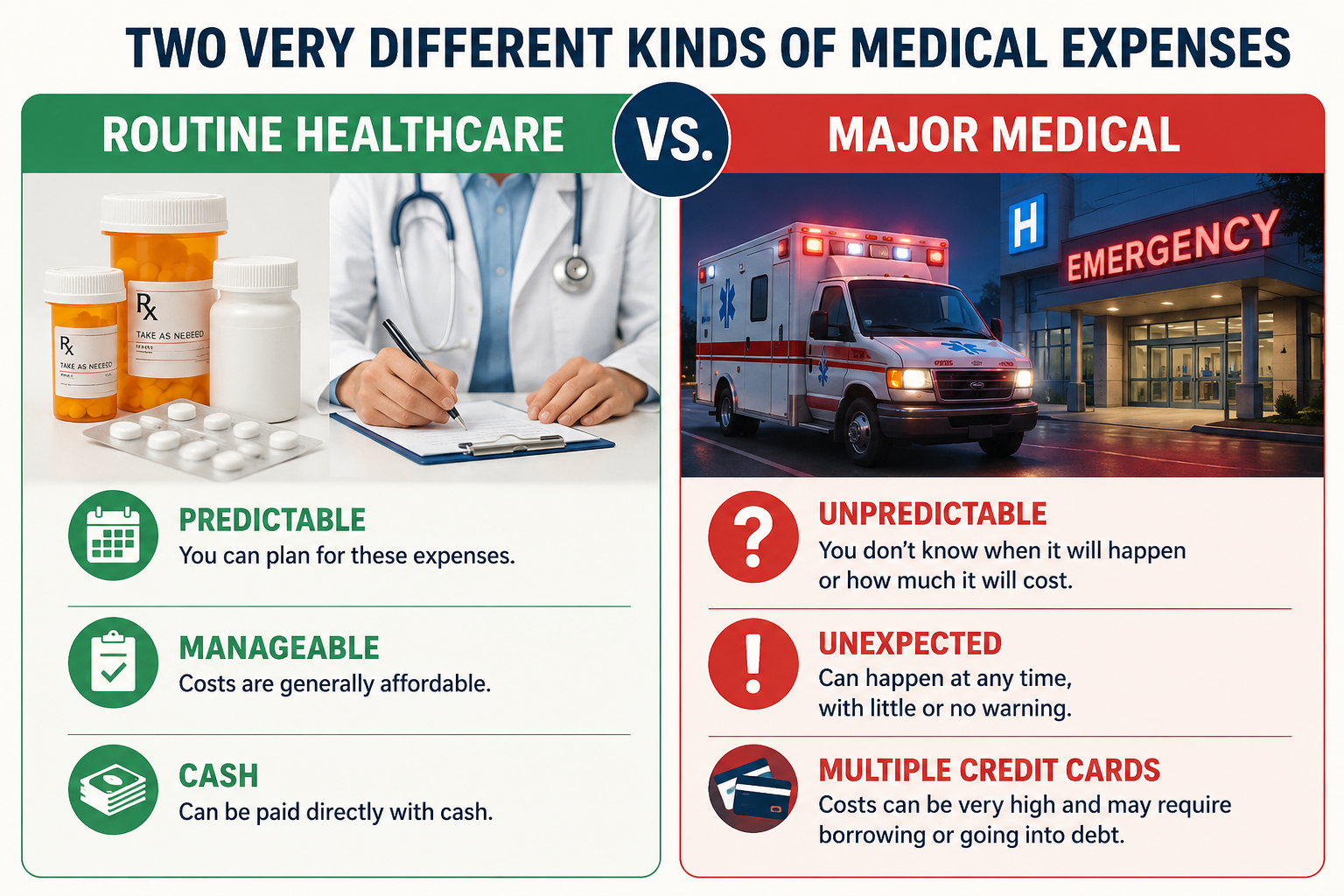
Routine medical expenses in Mexico—such as doctor visits, common medications, lab tests, and some outpatient procedures—can be affordable allowing many expats to pay for them directly. The more important question is not whether you can afford routine healthcare. It's whether you are comfortable using your retirement or healthcare savings to pay for an unexpected major medical event such as hospitalization, surgery, intensive care, or cancer treatment.
Can I Afford to Pay Cash for Healthcare in Mexico?
Medical care in Mexico can be significantly less expensive than in the United States or Canada. In many cases, paying cash for routine healthcare makes financial sense.
The cost of routine healthcare, however, tells you very little about what a major medical event could cost.
Paying cash may be the right strategy for some people. The important question is whether you understand how much financial responsibility you are willing and able to assume if a major medical event occurs.
What Medical Expenses Can I Pay for Myself in Mexico?
Routine healthcare expenses in Mexico are often affordable enough to pay directly because doctor visits, medications, lab tests, and other basic medical services generally cost much less than major medical care.
These expenses may include:
Routine doctor visits (GP and specialists)
Common maintenance medications
Lab tests
Basic diagnostic tests
Minor outpatient procedures
Preventive healthcare
Because these expenses are generally predictable, they can often be planned for as part of your healthcare budget.
What Major Medical Expenses Can Put My Retirement Savings at Risk?
The events that lead to costly medical care in Mexico are often the kinds of things no one plans for.
The events that lead to costly medical care in Mexico are often the kinds of things no one plans for. A fall on a cobblestone street. A serious automobile accident. High blood pressure that quietly progresses into kidney failure. A cancer diagnosis. A sudden cardiac event.
These medical events may require hospitalization, surgery, intensive care, rehabilitation, or ongoing treatment over weeks or months.
The question is whether you can comfortably assume the financial responsibility for a major medical event yourself or would rather transfer that risk to an insurance company.
How Much Money Do I Need to Self-Insure My Healthcare in Mexico?
There is no single amount of money that guarantees you can cover every possible medical event in Mexico.
In my seminar, How to Be Prepared for a Medical Emergency, I recommend having at least $200,000 USD per person available for major medical expenses. This is a planning estimate, not a guarantee of what a medical event could cost. Some medical events may cost considerably less, while others may exceed that amount depending on the medical care required.
The purpose of a financial reserve is not to predict what a medical emergency will cost. It is to make sure the money is available when you need it.
Is Paying Cash for Medical Expenses in Mexico the Right Strategy for Me?
The assumption is that routine healthcare expenses are affordable, so paying cash makes financial sense. If healthcare costs eventually become difficult to manage, you can simply apply for health insurance at that time.
The challenge is that health insurance in Mexico doesn't work that way.
Medical conditions that you treat by paying cash may become pre-existing conditions if you later apply for health insurance. Depending on your health history, those conditions may be excluded from coverage.
Healthcare planning requires looking at both financial risk and future health insurance eligibility. The decision you make today may affect the health insurance options available to you later.
A Health Insurance Strategy Session is designed to help you evaluate both before making a decision—protecting not only your retirement savings, but also your future health insurance options.
You May Still Be Wondering…
How Much Could a Major Medical Emergency Cost in Mexico?
How Much Money Do I Need to Self-Insure My Healthcare in Mexico?
Can I Buy Health Insurance Later If My Health Changes?
What Happens If I Develop a Pre-Existing Condition Before I Buy Health Insurance?
Is Health Insurance in Mexico Worth the Cost?
Need Help Deciding?
A Health Insurance Strategy Session can help you evaluate your financial risk, health history, and future insurance options before deciding whether paying cash or purchasing health insurance is the right strategy for you.